
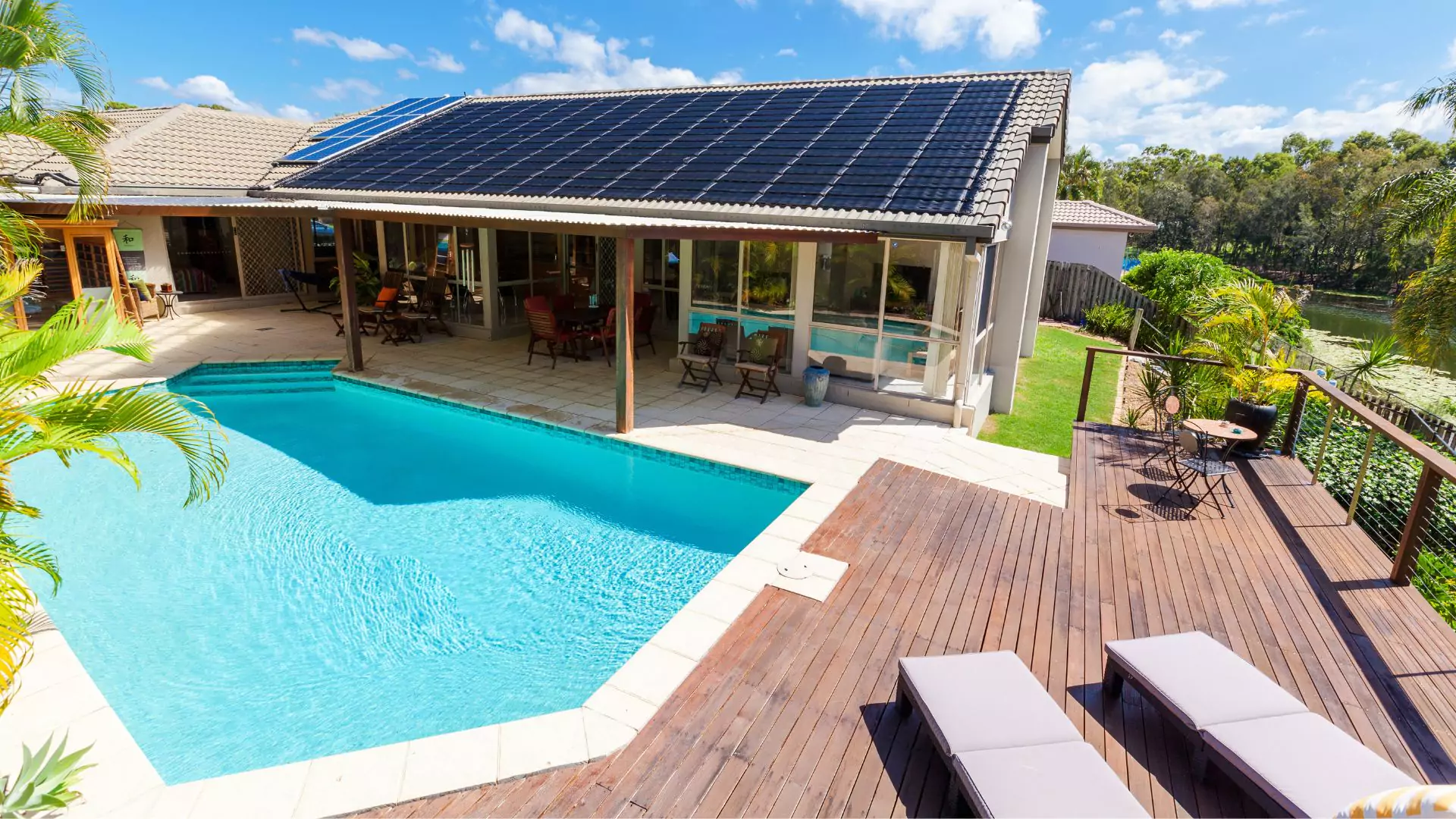
Quick Comparison Table: Pool Heating Costs
| Heating Method | Initial Cost | Monthly Operating Cost | Payback Period |
|---|---|---|---|
| Solar Pool Heater | $2,500–$4,000 | $10–$25 | 1–7 years |
| Pool Heat Pump | $2,500–$8,500 | $50–$150 | 3–8 years |
| Gas Pool Heater | $1,500–$4,500 | $200–$500+ | N/A |
Best For Each Climate
- Sunny climates (Florida, California, Arizona): Solar pool heaters deliver maximum savings
- Mild climates (Pacific Northwest, Mid-Atlantic): Heat pumps work consistently
- Variable weather: Combined solar-heat pump systems offer flexibility
“The combination of solar panels with pool heat pumps represents the future of sustainable pool heating. We’re seeing 70-80% reductions in operating costs for our clients who install hybrid systems.”
— Dr. Sarah Martinez, Solar Energy Systems Engineer
Can You Use Solar Panels with Pool Heat Pumps? (Direct Answer)
The Simple Answer
Yes, you can absolutely use solar panels with pool heat pumps. Moreover, this combination creates one of the most efficient pool heating systems available today. Additionally, you can set up this system in two different ways that work perfectly together.
Three Ways to Combine Solar and Heat Pumps
First, you can install photovoltaic (PV) solar panels that generate electricity to power your heat pump. Alternatively, you can use solar thermal collectors that heat water directly, then supplement with a heat pump when needed.
- PV Solar + Heat Pump: Solar panels generate free electricity to run the heat pump
- Solar Thermal + Heat Pump Backup: Solar heats water directly, heat pump provides consistent backup
- PVT Solar + Heat Pump:PV side generates electricity to power the heat pump, while its thermal side heats water
- Hybrid Systems: Combines both technologies for maximum efficiency
Key Benefits of the Combination
Furthermore, this setup delivers impressive advantages that make the investment worthwhile:
- Reduces electricity costs by up to 80% during sunny months
- Provides consistent heating even on cloudy days
- Extends swimming season by 3-4 months in most climates
- Qualifies for federal tax credits up to 30%
Cost Breakdown: What You’ll Actually Pay
Real-World Investment Numbers
Understanding the true costs helps you make a smart financial decision. Specifically, let’s break down what homeowners actually spend in 2025, including installation and ongoing expenses.
Upfront Investment Breakdown
- Solar Pool Heater Only: $2,500-$4,000 (including installation)
- Heat Pump Only: $2,500-$8,500 (plus $500-$2,500 installation)
- Hybrid System: $5,000-$12,000 (complete setup with both technologies)
- PV Solar + Heat Pump: $8,000-$15,000 (includes electrical work)
Monthly Operating Costs Reality Check
These numbers show what homeowners actually pay each month, based on average usage patterns:
| System Type | Summer Costs | Winter Costs | Annual Average |
|---|---|---|---|
| Solar Only | $5-$15 | $15-$35 | $120-$240 |
| Heat Pump Only | $40-$80 | $80-$200 | $600-$1,200 |
| Hybrid System | $10-$25 | $30-$60 | $240-$480 |
ROI Timeline with Real Examples
Here’s what actual homeowners experienced with their payback periods:
“Our $3,500 solar pool heater in Phoenix paid for itself in just 18 months. We went from $180/month gas heating bills to about $15/month for the pump electricity.”
— Mike Thompson, Pool Equipment Specialist, Desert Pool Solutions
The Beautiful Partnership
When you combine these systems, they work as a perfect team. During sunny days, solar does most of the work for free. On cloudy days or when you need extra heat quickly, the heat pump kicks in seamlessly.
- Sunny weather: Solar handles 80-100% of heating needs
- Cloudy weather: Heat pump provides consistent backup
- Night time: Heat pump maintains temperature efficiently
- Peak demand: Both systems work together for rapid heating
Which System is Right for You?
Climate-Based Decision Tree
Your location determines which system delivers the best value. Specifically, different climates favor different approaches, so let’s match your situation with the optimal solution.
Sunny Climates (300+ sunny days/year)
- Best Choice: Solar pool heater with heat pump backup
- Examples: Arizona, Southern California, Florida
- Expected Savings: 70-90% reduction in heating costs
Mild Climates (200-299 sunny days/year)
- Best Choice: Heat pump with solar assist
- Examples: Pacific Northwest, Mid-Atlantic states
- Expected Savings: 50-70% reduction in heating costs
Variable Climates (seasonal changes)
- Best Choice: Hybrid system with smart controls
- Examples: Midwest, Northeast regions
- Expected Savings: 40-60% reduction in heating costs
Budget and Pool Size Considerations
Additionally, your budget and pool specifications help narrow down the perfect fit:
| Pool Size | Budget Under $5K | Budget $5K-$10K | Budget Over $10K |
|---|---|---|---|
| Small (<15,000 gal) | Solar heater only | Heat pump + small solar | Full hybrid system |
| Medium (15K-25K gal) | Heat pump only | Solar + backup | PV solar + heat pump |
| Large (>25,000 gal) | Start with heat pump | Hybrid system | Complete solar solution |
Installation Guide: What to Expect
Step-by-Step Installation Process
Understanding the installation timeline helps you plan accordingly. Moreover, knowing what to expect prevents surprises and ensures smooth project completion.
Week 1: Planning and Permits
- Site assessment and system sizing
- Permit applications (typically $100-$300)
- HOA approvals if required
- Equipment ordering and delivery scheduling
Week 2-3: Installation Days
- Day 1-2: Solar collector mounting and plumbing
- Day 3: Heat pump placement and electrical work
- Day 4: System integration and testing
- Day 5: Final inspection and customer training
Professional vs DIY Options
While some homeowners consider DIY installation, professional installation offers significant advantages:
Professional Installation Benefits:
- Warranty protection (10-20 years typical)
- Proper permits and code compliance
- Insurance coverage during installation
- Expert system sizing and optimization
“Proper installation makes the difference between a system that works for 20 years versus one that fails in 5. The upfront investment in professional installation pays dividends in performance and longevity.”
— James Rodriguez, Certified Pool Equipment Installer
Maintenance Made Simple
Monthly Tasks (15 Minutes)
Keeping your pool heating system running efficiently requires minimal effort. Specifically, these simple monthly checks prevent major problems and extend equipment life.
Solar System Check
- Visually inspect collectors for debris or damage
- Check flow indicator to ensure proper circulation
- Clear any leaves or obstructions from collector area
- Monitor temperature differential between inlet and outlet
Heat Pump Maintenance
- Clean or replace air filter (dirty filters reduce efficiency 20%)
- Check area around unit for debris or vegetation
- Listen for unusual noises during operation
- Verify proper airflow through coils
Annual Professional Service
Professional maintenance ensures warranty compliance and catches problems early:
Annual Service Includes:
- Refrigerant level check and adjustment
- Electrical connection inspection and tightening
- Coil cleaning and fin straightening
- Control system calibration and testing
- Complete system performance evaluation
Cost: $150-$300 annually
Warning Signs to Watch For
Recognizing these early warning signs prevents costly repairs:
- Reduced heating performance: Takes longer to reach desired temperature
- Higher electricity bills: 20%+ increase without usage changes
- Unusual noises: Grinding, clicking, or rattling sounds
- Frequent cycling: System turns on and off repeatedly
- Ice formation: Ice on coils during mild weather indicates problems
Real User Experiences
Success Stories with Actual Savings
Real homeowners share their experiences with solar pool heating and heat pump systems. These authentic stories provide valuable insights into actual performance and savings.
“We installed a hybrid system in our Phoenix home three years ago. Our monthly pool heating costs dropped from $240 to $35. The system paid for itself in under two years, and we swim comfortably from March through November.”
— Lisa Chen, Phoenix, AZ homeowner
FAQ Section
Most Common Questions Answered
How long do pool heat pumps with solar panels last?
Solar collectors last 15-20 years, while heat pumps typically last 10-15 years. With proper maintenance, many systems exceed these lifespans significantly.
Can I install solar pool heating on any roof?
Most roofs work, but south-facing roofs with minimal shading perform best. East and west-facing roofs can work with slightly reduced efficiency.
Do pool heat pumps work in cold weather?
Standard heat pumps lose efficiency below 50°F, but newer cold-climate models work down to 20°F. Solar backup helps during cold spells.
What size heat pump do I need for my pool?
Calculate 1 BTU per gallon for each degree of desired temperature rise. A 20,000-gallon pool typically needs a 75,000-100,000 BTU heat pump.
How much can I save with government incentives?
Federal credits alone save 30% of total costs through 2032. Combined with state incentives, total savings can reach 40-50%.
Is professional installation required?
Professional installation is strongly recommended for warranty protection and optimal performance. Many areas require permits and inspections.
Can I use my existing pool pump with a heat pump?
Most existing pumps work fine, but variable-speed pumps optimize efficiency. Your installer will evaluate compatibility during assessment.
How quickly do pool heat pumps heat water?
Heat pumps raise temperature 1-3°F per hour, depending on size and conditions. Solar assist speeds initial heating significantly.
Conclusion: Make the Smart Choice for Your Pool
Your Next Steps to Pool Heating Success
Combining pool heat pumps with solar panels represents the future of efficient, cost-effective pool heating. With 30% federal tax credits available through 2032 and proven savings of $1,000-$2,400 annually, now is the perfect time to upgrade your pool heating system.
The evidence clearly shows that hybrid systems deliver the best of both worlds: consistent heating performance with minimal operating costs. Whether you choose solar-first with heat pump backup or a PV-powered heat pump system, you’ll enjoy extended swimming seasons while reducing your environmental impact.

 English
  Français
  Deutsch
  Español
  Italiano
  Polski
  Português
  Русский
  Türkçe
  العربية
  日本語
日本語  한국어
한국어